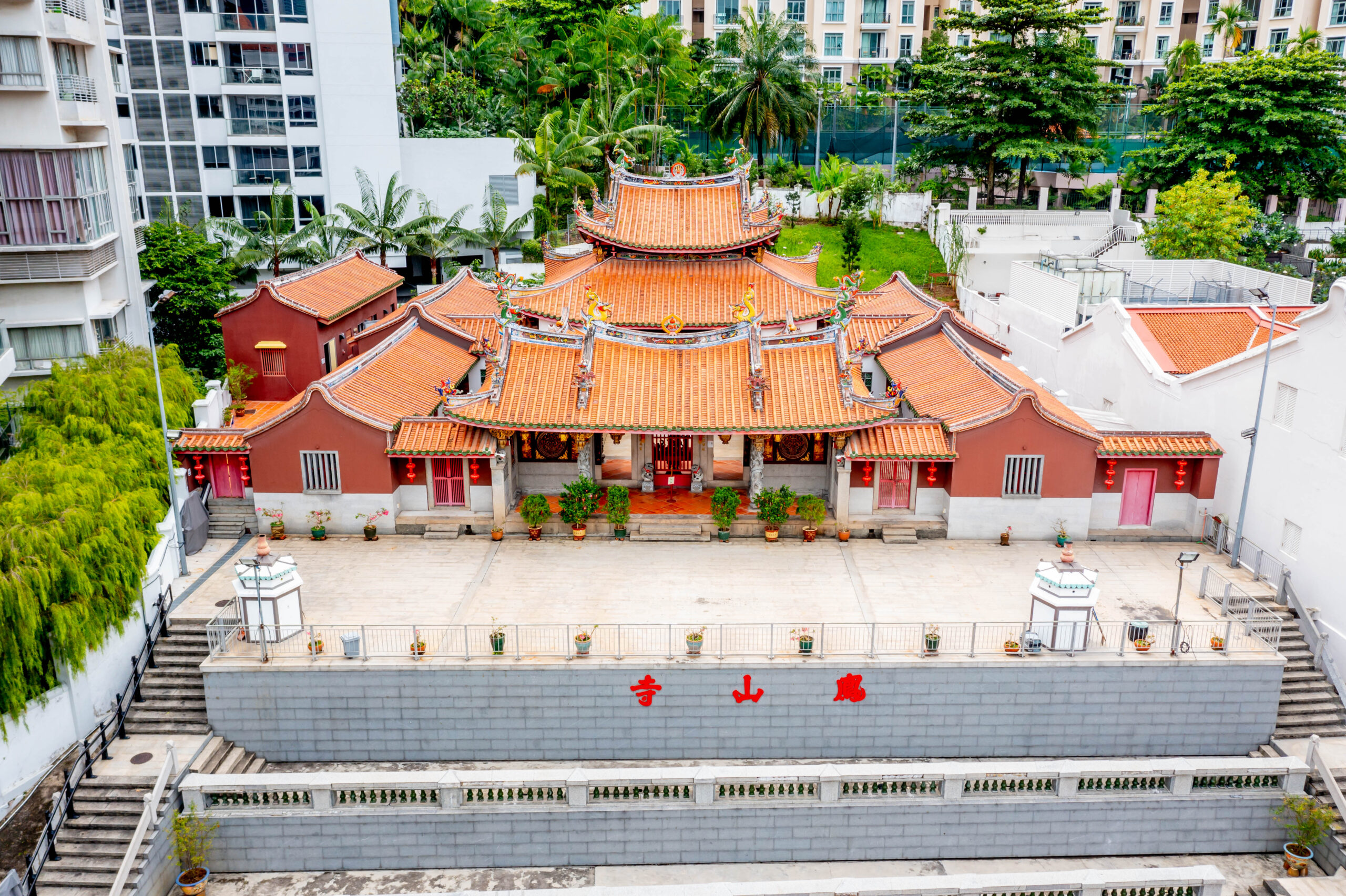
Hong San See Temple

Since its establishment, Hong San See Temple has undergone four renovations: in 1868, 1976, 1994, and a major restoration in 2004. The 2004 restoration, in particular, received international acclaim, earning the 2010 UNESCO Asia-Pacific Awards for Cultural Heritage Conservation-Award of Excellence. It is the only temple locally to receive this prestigious honour.

After its renovation, Hong San See Temple became a unique hall of traditional Chinese temple restoration art and culture in Singapore, and it is an important historical and cultural monument of great value to the nation’s heritage. The Lam Ann Association was awarded the 2013 Outstanding Association Award by the Singapore Federation of Chinese Clan Associations in 2014 for its outstanding efforts in restoring this temple.

Hong San See Temple and the Lam Ann Association have a close relationship, can be said to be one entity, with the temple preceding the association. Hong San See Temple has witnessed Singapore’s growth and development, serving as a shared spiritual and cultural heritage of the multicultural nation.

水廊头凤山寺建寺190周年庆

南安会馆管理的凤山寺在1836年(清朝道光十六年),由先贤梁壬癸等人发起,于青山亭附近(丹戎巴葛地铁站附近的华利街)兴建。在南安会馆还没有成立以前,凤山寺是早期南来南安人的重要机构,肩负着照顾乡亲、促进乡谊的职责,是当时南安邑人的主要聚集场所。

1907年(光绪三十三年),青山亭原址因受城市发展影响,获赔偿地价五万元,理事遂物色到现址摩哈末苏丹路建寺。由于现址一带早期设有水厂制冰,大家俗称它为水廊(“廊“在闽南话即为”厂“的意思),寺庙也因此被称为“水廊头凤山寺”,主祀广泽尊王。

190年来,凤山寺历经4次重大修复,依然屹立在山巅,给予善信庇佑。2005年凤山寺管理委员会开始筹划进行最大规模的落架大修。修复工程于2009年顺利完成,耗资250万元修缮的凤山寺,重现辉煌,恢复昔日风采。这项工程的卓越成就,让凤山寺荣膺2010年联合国教科文组织颁发的“亚太文化资产保存卓越奖”,并于11月23日举行隆重授奖典礼。这也是本地唯一一座获得这项殊荣的华人庙宇。

早期闽帮庙宇的迎神赛会有妆艺游行绕境的习俗,其中,凤山寺的广泽尊王、恒山亭的福德正神,以及金兰庙的清水祖师并列,且被请至天福宫内接受善信膜拜可见这三间庙宇与神祇的地位在当时的华人社群中所受到重视。(详见1896年12月2日《叻報》)

为庆祝凤山寺建寺190年,寺务组开始进行筹划,再一次主办游行绕境活动。活动在2026年9月19日举行,寺方广邀本地闽籍庙宇的神明一同前来驻驾、巡安绕境。执行顾问陈奕福表示:“过去天福宫举行庆典时,会到凤山寺迎请广泽尊王,也会请来清水祖师和保生大帝;庆典结束后,再用花车将神明送回。我们这次其实就是要恢复这些新加坡的传统文化。”

这是凤山寺继2014年后,相隔约12年再次举办这样的迎神巡安活动。与2014年的巡安绕境活动不同,当年主要是迎请中国南安县诗山镇凤山寺主庙的神明广泽尊王金身来新;这一次则以本地庙宇为主,迎请60座宫庙的90尊神明齐聚凤山寺,共庆190周年,当中包括天福宫的天上圣母(妈祖)、恒山亭的福德正神、金兰庙的清水祖师和真人宫的保生大帝等。

会长梁佳吉表示,庆典约于一年前开始策划,筹备小组约20人,另设多个工作小组,分别负责联系庙宇、安排路线、花车、仪式和接待等事宜。由于参与的神尊众多,如何安全护送成为筹备工作的重点之一。寺务组主任傅成发说:“各间庙宇都会出动自己的义工和庙方人员,亲自将神尊护送过来。许多神尊已有百年历史,因此我们责任重大,整个过程必须安排得非常小心。” 在延续信仰传统的同时,凤山寺也积极引入年轻力量和环保做法。寺务组副主任陈定扬说:“这次庆典我们邀请了许多年轻后辈一起参加。”

当天傍晚,执行顾问陈奕福徒步走在前头引领,游行队伍出动数百人,还有多辆花车,舞龙舞狮,锣鼓喧天,从凤山寺出发,绕着里峇峇里路游行一周,再回到凤山寺。游行队伍沿途吸引大批民众围观,拍照和录视频,气氛热烈。寺务组也在安排了歌台、 祥龙、醒狮跳桩、舞大旗、踩高跷等,一片欢腾,将庆典推至最高潮。

History of Hong San See Temple
1836

In the 16th year of Daoguang, reign of the Qing Dynasty (1836), the Nan’an sage Liang Rengui and others built the Hong San See Temple near Qingshan Pavilion (Wallich Street at Tanjong Pagar MRT Station). In the 7th year of Tongzhi, the former sages Cai Pengnan, Song Qilin and others initiated the renovation project of the temple.

1905

For the needs of the Telok Ayer reclamation project, the Straits Settlements government requisitioned the temple land in 1905. Using the compensation money, the temple directors purchased land on Mohamed Sultan Road (formerly known as Shui Leng Tou) and rebuilt the Hong San See Temple.

1908

he reconstruction project began in 1908 and the current Hong San See Temple was completed in 1913.

1914

In light of the fact that many children in the neighborhood need a school to receive education, Hong San See Temple used the side chambers on both sides of the temple to establish Nan Ming School. The school accommodated over a hundred needy children, regardless of their races and religions, allowing them to receive an education. Nan Ming School ceased operations in 1930 due to a decline in student enrolment.

1973

The Lam Ann Association officially took over the management of Hong San See Temple.

1978

The Hong San See Temple has been gazetted as a national monument by the National Heritage Board.

2004

The century-old Hong San See Temple, under the jurisdiction of the association, has once again suffered severe damage from termite infestation. The association started a major restoration work for the temple in 2004, and completed in end of year 2009.

2010

Received the UNESCO Asia-Pacific Awards for Cultural Heritage Conservation-Award of Excellence.

2013

Awarded the URA Architectural Heritage Awards by Urban Redevelopment Authority of Singapore.

Feature Spots at Hong San See

An intricately carved heavenly lantern dating from the 19th century, representative of the Jade Emperor, can be found at the front of the main hall.

The patron deity of the temple and the Lam Ann community is enshrined on the main altar with his consort. A wood carving with a filial piety theme can be found above the altar.

Dragon fish or “ao yu” carvings are placed at the four corners of the front hall behind the front entrance as a traditional ward against fire.

Phoenix Door Guardians Inspired by the temple’s name, a pair of phoenixes are painted on the temple’s main doors in place of the more commonly seen door guardian figurines.

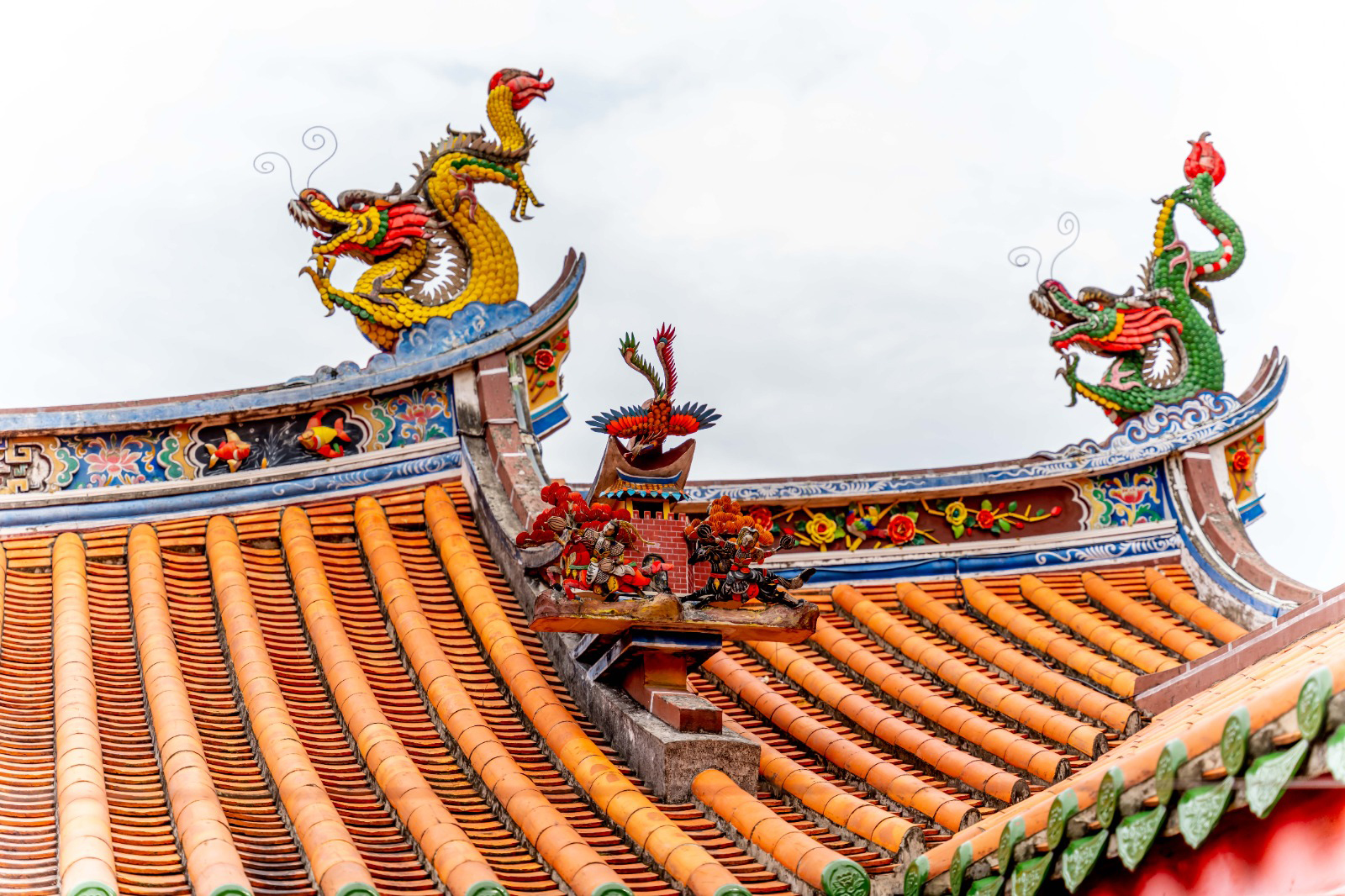
A pair of water buffalos can be found on the roof ridges surrounding the central courtyard. The water buffalo features in the legend of the patron deity’s ascension.

According to tradition, the burner on the left (looking out from the temple) is for offerings to the heavenly deities and the one on the right is for underworld deities.

Four pairs of couplets by Pan Shou can be found on the pillars of the main hall. The works of the eminent calligrapher and educationist are believed to have been completed in the 1970s.

When the temple moved from Mt. Wallich, the tombs of Lam Ann pioneers buried nearby were removed as well and re-interred in a common grave. Respects are paid to them during the annual Cheng Beng (Thanksgiving) festival.

The century old weathered granite stairway has a different number of steps on each side.

These granite columns are adorned with peonies and magpies which signify happiness and prosperity. Building columns decorated with such motifs are rare even in other parts of the world.

A stela dated 1869 which gives the year of the temple’s founding and the name of the founder. It is one of the few artefacts retrieved from the old temple at Mt Wallich.

A statue of a man supporting a beam or other wooden structural element which is common in Minnan architecture. A few such statues can be seen at various locations in the temple.

Unlike the other deity statues in the temple, the statue of the City God is fashioned like a marionette with pliable limbs and body.

Delightful carvings of the Eight Immortals astride their mounts can be found on the “dragon” columns at the temple’s front and also on wooden structural members on either side of the main hall.